
The Big Decision: Navigating Your College Acceptances


Congratulations, high school seniors! The acceptance letters are rolling in, and that’s a huge accomplishment. But now comes the next big step: choosing which of these institutions will be your home for the next four years.
The truth is, there’s no single “perfect” college. The best fit is personal—and it’s about more than prestige or excitement. Here’s how to approach this decision thoughtfully and holistically.
Tip 1: Visualize Your Future Self
Don’t just think about what looks good on paper. Close your eyes and imagine yourself on each campus. What are you doing? Who are you with? Are you thriving in a bustling city environment, or do you picture yourself on a quieter, green campus? Are you spending evenings in the library, or deeply involved in clubs, music, athletics, or leadership?
This kind of visualization often reveals subconscious preferences and helps clarify where you’re most likely to feel grounded, motivated, and successful.
Tip 2: The Power of Pros & Cons (and a Curated Spreadsheet)
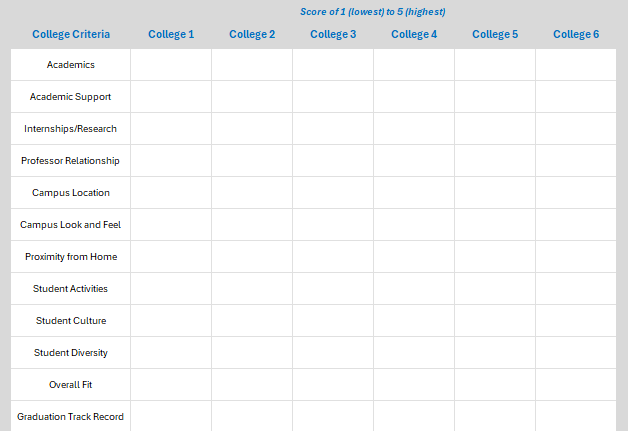
I always recommend creating a pros and cons list for each college. With my students, we take this a step further by using a spreadsheet with college criteria to consider—along with anything individually important the student wants to add.
After students rate each school, we look at the overall picture together. The goal isn’t to let a number make the decision, but to create a clear visual that supports thoughtful family conversations and helps patterns emerge.
Tip 3: Revisit (or Visit for the First Time!)
If possible, revisit the campuses that are high on your list—or visit for the first time if you haven’t yet. Official tours are helpful, but also try to experience the campus like a student. Grab coffee at the student union, walk through residence halls, sit in on a class, or simply observe.
Pay attention to the students you see. Do they seem engaged? Comfortable? Like people you’d want to spend the next four years alongside? The “vibe” of a campus often matters more than families expect.
Tip 4: Look at Cost Across All Four Years
We’ve covered financial aid and affordability in detail in previous blogs, but cost deserves a place in the final decision conversation.
When comparing offers, it’s important to look beyond the first-year price tag and consider the total financial picture, including:
Whether grants or scholarships are guaranteed for all four years—or require renewal
Your potential student loan debt at graduation
A commonly cited guideline is that total student loan debt should not exceed a student’s expected first-year salary. While every situation is different, this can be a helpful reference point when weighing options. Cost should be a variable in this decision.
Tip 5: Don’t Let “Senioritis” Undermine Your Future
Receiving an acceptance letter is a major milestone, but it isn’t a finish line. As you navigate your final semester, keep these important reminders in mind:
Acceptance Is Conditional: Colleges admit students with the expectation that they will maintain their academic performance and course rigor through graduation.
Final Transcripts Are Reviewed: After graduation, your final transcript is sent to your chosen college and reviewed. Significant grade drops or noticeable disengagement can prompt questions—and in rare cases, consequences.
The “Fine Print” of Rescinded Admissions: While uncommon, admissions offers can be rescinded due to:
Major declines in grades
Dropping a core or advanced course listed on your application without prior approval
The bottom line: Keep your foot on the gas. You don’t need to be perfect—but you do need to follow through. Finishing strong reflects character, integrity, and respect for your teachers and your commitments. Those qualities matter now, and they matter as you transition into college and adulthood.
Important Reminder About Enrollment Decisions
As you move toward a final choice, it’s important to know that students must submit an enrollment deposit to only one college by May 1. Placing deposits at multiple schools—even “just in case”—is considered unethical and goes against college expectations.
When students hold multiple spots, it delays decisions for other students who are waiting on waitlists and hoping for an opportunity to attend. Colleges rely on students to act in good faith so they can manage enrollment responsibly.
Being thoughtful and decisive at this stage is part of finishing the process well. It shows respect for the admissions process, for colleges, and for fellow students navigating the same decisions.
As a college consultant, I help students and families move past the prestige and the pressure to find the school where they will truly thrive. Contact me to schedule a consultation.


Comments